Exposing the right to harm ‘enablers’: legislation
Australian anti-cruelty laws promise protection. For pigs used by the farming industry, codes, exemptions, defences and legal omissions can narrow that promise until serious suffering remains permitted.
Exposure #1 of our Pigs Without Borders campaign explores Australian Commonwealth and State/Territory legislation, including the risks and impacts to Australian pigs, the Environment and People
Exposure #1 of Animal Liberation’s Pigs Without Borders campaign examines how Commonwealth, state and territory laws shape the treatment of Australian pigs—and how legally permitted intensive farming practices also affect workers, communities, public health and our shared environment.
Australia does not have one national farm-animal welfare law governing pigs on farms. States and territories hold primary responsibility for animal welfare legislation, while national model codes and standards only become enforceable when individual jurisdictions implement them.
The result is a fragmented system in which an act may be prohibited in one context yet permitted, regulated or extremely difficult to prosecute when it occurs as part of commercial animal use.
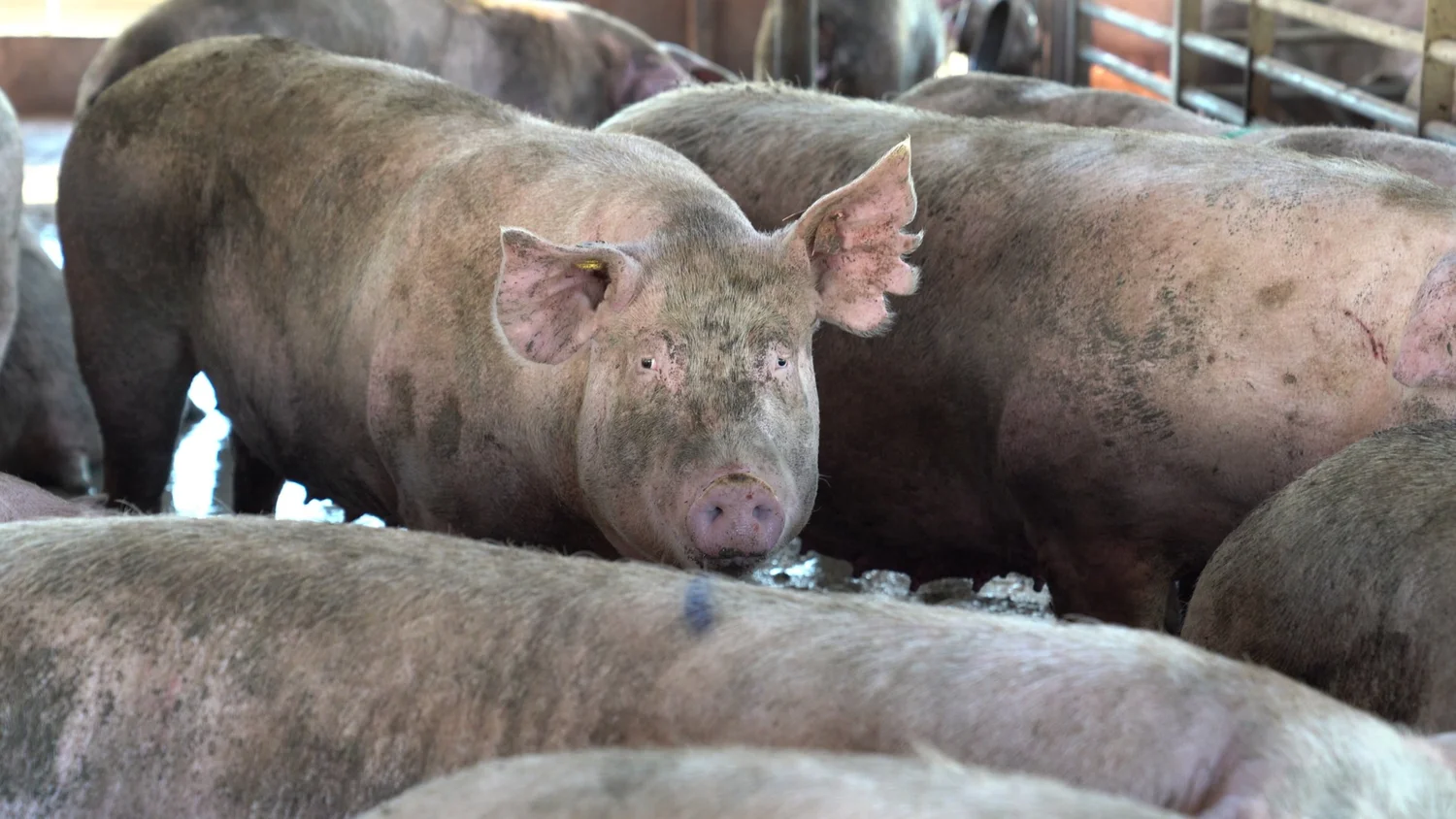
Animal welfare legislation sits alongside codes, exemptions, defences and omissions that can preserve harmful industry practices.
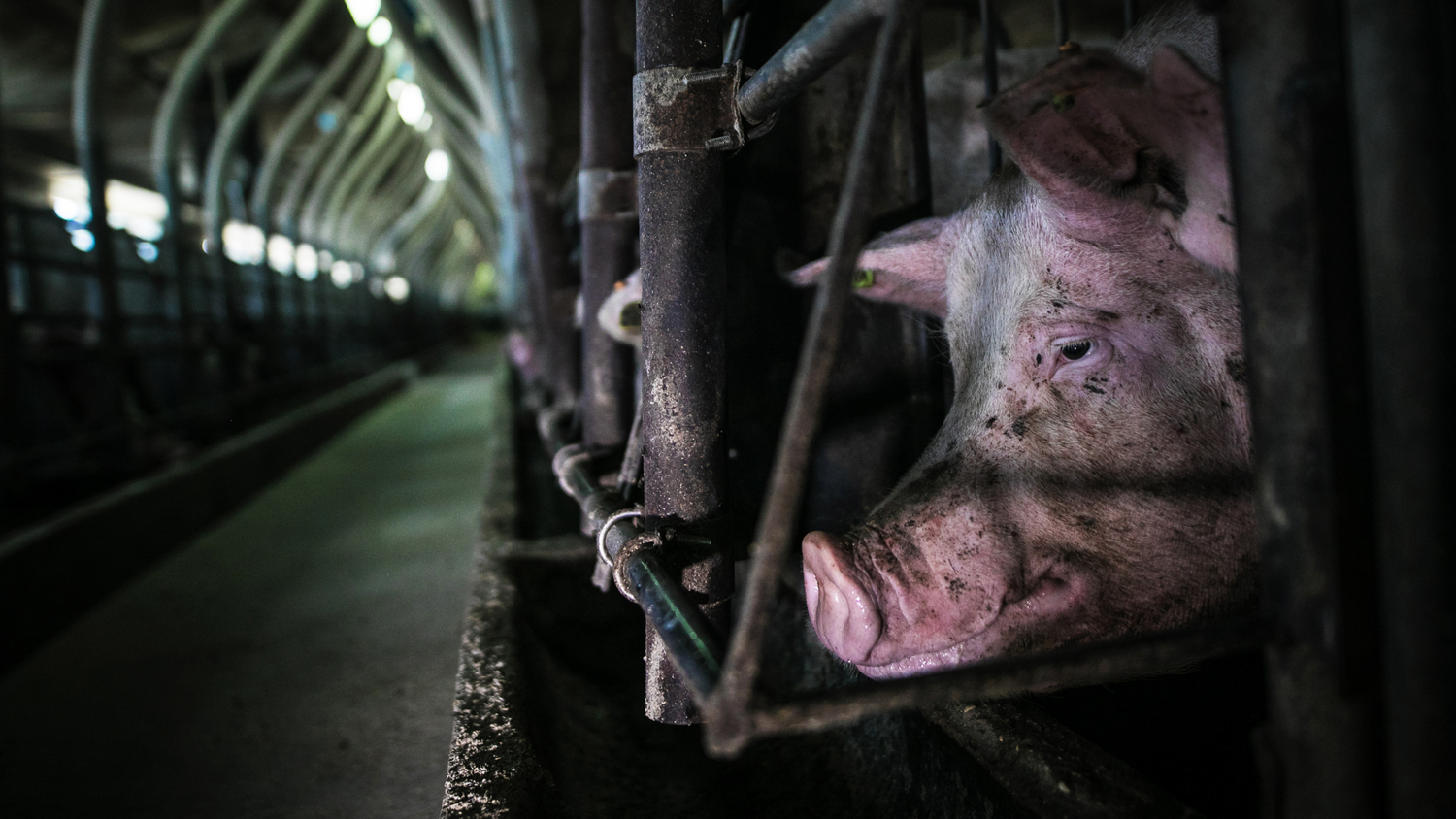
One outdated national reference
The Commonwealth still lists the 2008 Model Code of Practice for the Welfare of Animals: Pigs and reports no current national standards project for pigs.
Different rules across Australia
Each jurisdiction decides how animal welfare Acts, regulations, codes, offences, defences and enforcement systems apply.
Cruelty can remain legal
A practice may remain lawful because a code permits it, a minimum standard regulates it, a defence protects it or legislation fails to prohibit it.
Environment and people are affected too
Animal welfare law is separated from environmental protection, worker safety, public health and community regulation. This fragmentation allows each system to address only one part of an interconnected system of harm.
When the law defines how suffering may occur instead of preventing it, the law becomes part of the system causing the harm.
Tell governments to end the legal right to harm pigs.
Send a personal email calling for nationally consistent, enforceable protections that prevent suffering instead of setting the conditions under which it may continue.
Why your email matters
- Your location connects the message to the government responsible for the laws where you live.
- Selecting priorities makes your email more specific and harder to dismiss as duplicated correspondence.
- The recommended routing targets Commonwealth decision-makers and the agriculture portfolios in your jurisdiction.
- Animal Liberation can use government replies, non-responses and commitments to build public accountability and guide campaign follow-up.
Email decision-makers
Use the form below to ask Commonwealth and state or territory decision-makers to replace fragmented laws and industry codes with binding, enforceable protections for pigs. Review the campaign letter, add your details and send your message directly from this page.
Call on governments to replace fragmented laws, exemptions and voluntary codes with binding protections that prohibit confinement, routine painful procedures and other practices causing pigs serious suffering.
The live campaign letter form will appear here once the Action Network embed is connected.
Your information will be processed through Action Network and used to deliver your message and support this campaign in accordance with Animal Liberation’s privacy practices.
The system is fragmented by design.
No single regulator is responsible for the full impact of pig farming on animals, workers, communities and the environment. Each legal layer sees only part of the harm.
Coordinates national codes and standards, trade and export-related systems—but does not create one national on-farm welfare law.
Creates offences, regulations, enforcement powers and the legal status of codes in each jurisdiction.
Define how housing, procedures, handling and other practices may occur rather than asking whether they should occur.
Planning, pollution, food safety, biosecurity and workplace safety systems address different parts of the same operation.
Choose a jurisdiction. See the law. See what it allows.
Select the Commonwealth or a state or territory to examine the principal laws, codes and legal mechanisms governing pig farming—and what those systems permit, regulate or fail to prevent.
Commonwealth
The Australian Government coordinates national animal welfare standards work and regulates areas including trade and exports, but states and territories retain primary responsibility for on-farm animal welfare law.
- 2008 Model Code of Practice for the Welfare of Animals: Pigs
- Australian Animal Welfare Standards and Guidelines development process
- Australian Animal Welfare Standards and Guidelines — Land Transport of Livestock
- Separate Commonwealth export and export-processing frameworks
The Commonwealth’s current standards page lists pigs under the 2008 Model Code and records “No current work”, leaving pigs outside the newer standards process applied to some other farmed species.
Even when national standards are developed, each state and territory decides how and whether to implement them in its own legislation.
Primary sources: Australian animal welfare standards and guidelines · State and territory legislation register
New South Wales
Commercial pig establishments are tied to a specific 2009 code through the current Prevention of Cruelty to Animals Regulation.
- Prevention of Cruelty to Animals Act 1979
- Prevention of Cruelty to Animals Regulation 2025
- Animal Welfare Code of Practice—Commercial Pig Production (December 2009)
- Prevention of Cruelty to Animals (Land Transport of Livestock) Standards 2013 No 2
Compliance with the code forms part of the regulatory duties applying to commercial pig establishments. The framework therefore relies on detailed industry standards to define conduct that is treated as legally acceptable.
The code permits a pregnant sow to be confined in a stall for up to six weeks in a gestation period, subject to specified veterinary-treatment and special-care exceptions. It also regulates farrowing crates rather than prohibiting their use.
Primary sources: Prevention of Cruelty to Animals Regulation 2025 · Animal Welfare Code of Practice—Commercial Pig Production
Victoria
Victoria regulates animal welfare through its Act, regulations and applicable codes, while planning, environment and workplace laws govern separate parts of pig production.
- Prevention of Cruelty to Animals Act 1986
- Prevention of Cruelty to Animals Regulations 2019
- Applicable pig welfare code and incorporated standards
- Separate planning, environment and occupational health and safety frameworks
The Act provides the overarching offence and enforcement structure, while regulations and applicable codes supply more detailed requirements for care, housing and procedures.
Planning, environmental and workplace laws address different impacts, so no single framework assesses the full harm to pigs, workers, communities and the environment.
Official source: Commonwealth register of Victorian animal welfare legislation
Queensland
Queensland’s Act expressly connects offence exemptions with compliance with relevant code provisions in defined circumstances.
- Animal Care and Protection Act 2001
- Animal Care and Protection Regulation 2023
- Code of practice about pigs prescribed under the Regulation
- Separate environment, planning and work health and safety laws
The Act states that where a code describes how the relevant act may be carried out, the offence exemption only applies if the relevant code provisions have been complied with.
The framework distinguishes compulsory requirements from recommended practices, while compliance with relevant code provisions can be central to whether an offence exemption applies.
Primary sources: Animal Care and Protection Act 2001 · Animal Care and Protection Regulation 2023
South Australia
South Australia regulates animal welfare through its Act and regulations, with applicable codes and separate environmental and development laws shaping intensive pig production.
- Animal Welfare Act 1985
- Animal Welfare Regulations 2012
- Applicable pig welfare code or adopted national model code
- Environment Protection Act and development approval framework
The legal effect of industry standards depends on how they are recognised under the Act and regulations, rather than on one nationally consistent pig-welfare law.
Development approval, pollution control and public-information requirements operate separately from animal welfare enforcement.
Official source: Commonwealth register of South Australian animal welfare legislation
Western Australia
Western Australia has pig-specific regulations in force, making the legal permission and minimum-space framework more directly visible in subsidiary legislation.
- Animal Welfare Act 2002
- Animal Welfare (General) Regulations 2003
- Animal Welfare (Pig Industry) Regulations 2010
- Separate environmental approval, pollution and worker safety frameworks
By prescribing conditions for stalls, enclosures and farrowing crates, the regulations manage how close confinement may occur instead of abolishing it.
The rules address matters such as space, exercise, care and inspection while leaving the confinement systems themselves legally available.
Primary source: Animal Welfare (Pig Industry) Regulations 2010 — current versions
Tasmania
Tasmania introduced new pig-specific regulations in 2025, providing a current example of detailed legal minimums that still require scrutiny against pigs’ behavioural and welfare needs.
- Animal Welfare Act 1993
- Animal Welfare (Pigs) Regulations 2025
- Animal Welfare (Transport of Livestock) Regulations 2025
- Separate environmental management and workplace safety frameworks
They define a farrowing crate as confinement in which a pig is unable to turn around and establish detailed requirements across care, procedures, housing and records.
This approach sets measurable conditions for confinement, but meeting a minimum movement or access requirement is not the same as ending close confinement.
Primary source: Animal Welfare (Pigs) Regulations 2025
Northern Territory
The Northern Territory’s general animal-protection framework applies alongside recognised standards and separate environment, planning and workplace laws.
- Animal Protection Act 2018
- Animal Protection Regulations 2022
- Any adopted or recognised pig code provisions
- Separate environment, planning and work health and safety laws
Where legislation does not set a pig-specific prohibition, responsibility turns on general duties, recognised standards and the facts of an individual case.
Animal welfare complaints, environmental issues and workplace risks follow different pathways, making whole-of-system accountability difficult.
Official source: Commonwealth register of Northern Territory animal welfare legislation
Australian Capital Territory
The ACT’s animal-welfare framework recognises animal sentience, while commercial production, transport, sale and processing may engage different laws and jurisdictions.
- Animal Welfare Act 1992
- Animal Welfare Regulation 2001
- Relevant codes, standards and declarations
- Separate environment, planning and work health and safety laws
On-farm production, transport, sale and processing can fall under different statutory systems and may extend beyond the Territory.
A general principle is only as protective as the specific duties, prohibitions, inspection powers and enforcement practices that give it effect.
Official source: Commonwealth register of ACT animal welfare legislation
The consequences extend beyond one law.
Explore how fragmented legislation enables harm to pigs, manages environmental consequences and divides responsibility for impacts on workers and communities.
 AnimalsPermitted harm
Anti-cruelty law should prevent cruelty—not prescribe its dimensions.
Many rules focus on the measurements of confinement, the maximum time it may continue or the competency of the person performing a procedure. The central question is too rarely asked: should the practice be permitted at all?
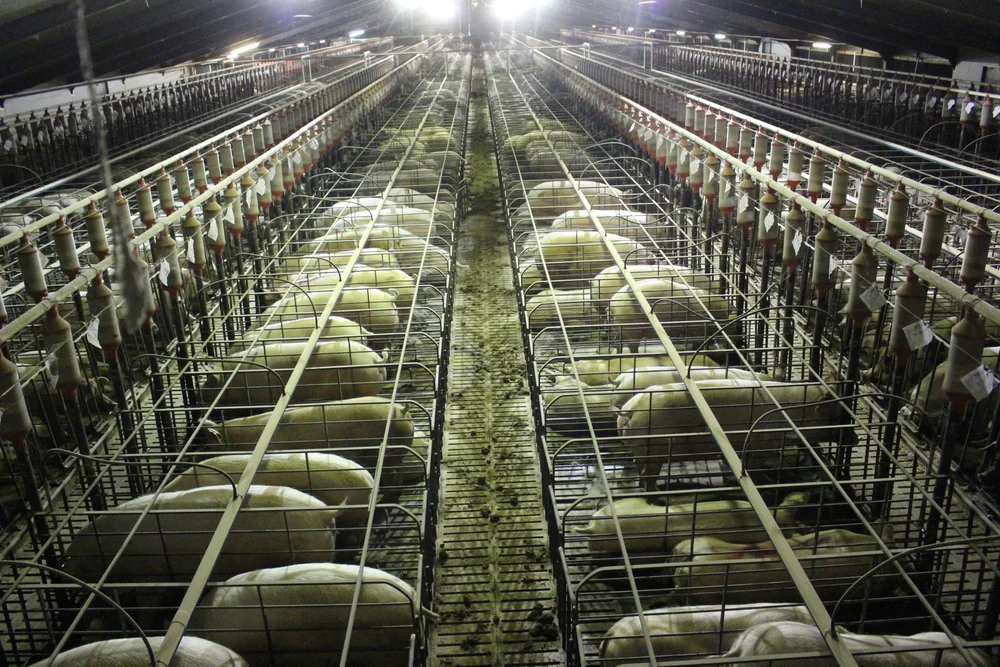
A sow stall closely confines an individual pregnant pig. Some laws or codes limit the period of confinement, but a legal maximum still allows prolonged restriction of movement.
The 2008 national Model Code permits a pregnant sow to be confined in a stall for up to six weeks of a gestation period after the transition period, with exceptions for veterinary treatment or special care. NSW incorporates its commercial pig code into the regulatory framework and applies the same six-week limit. Other jurisdictions use their own laws and codes, so the legal mechanism varies—but a time limit still regulates confinement rather than prohibiting it.
Farrowing crates restrict a mother pig during and after birth. She may be able to stand and lie down but cannot turn around, move freely, build a proper nest or interact naturally with her piglets.
The 2008 Model Code and several jurisdictional instruments contemplate farrowing crates and regulate their dimensions, duration, inspection and care requirements. This manages the conditions of confinement rather than creating a nationally consistent prohibition.
Industry rules may classify invasive interventions as routine or elective husbandry procedures. Requiring a competent person to perform a painful act does not remove the pain, and age thresholds can determine whether anaesthesia is expressly required.
The legal framework commonly regulates who may perform a procedure, the pig’s age, competency, pain-relief thresholds and recordkeeping. These controls can leave the procedure lawful even when it causes pain.
Minimum floor-space formulas can allow pigs to remain in barren and crowded environments with little opportunity to forage, explore, retreat or rest comfortably.
Minimum space formulas establish a legal floor, not a species-appropriate living standard. A pig can satisfy a prescribed space calculation while still lacking meaningful enrichment, nesting material, social choice, foraging opportunities and freedom of movement.
Transport and slaughter sit across additional national standards, state rules, food regulation and facility-specific enforcement. These systems generally manage an industry process rather than recognise a pig’s interest in avoiding fear, pain and death.
On-farm welfare rules end where transport, saleyard, food-regulation and slaughter frameworks begin. Separate standards and regulators make it harder to follow one pig’s experience and establish accountability across the full supply chain.
 EnvironmentManaged pollution
The law manages pollution without questioning the system producing it.
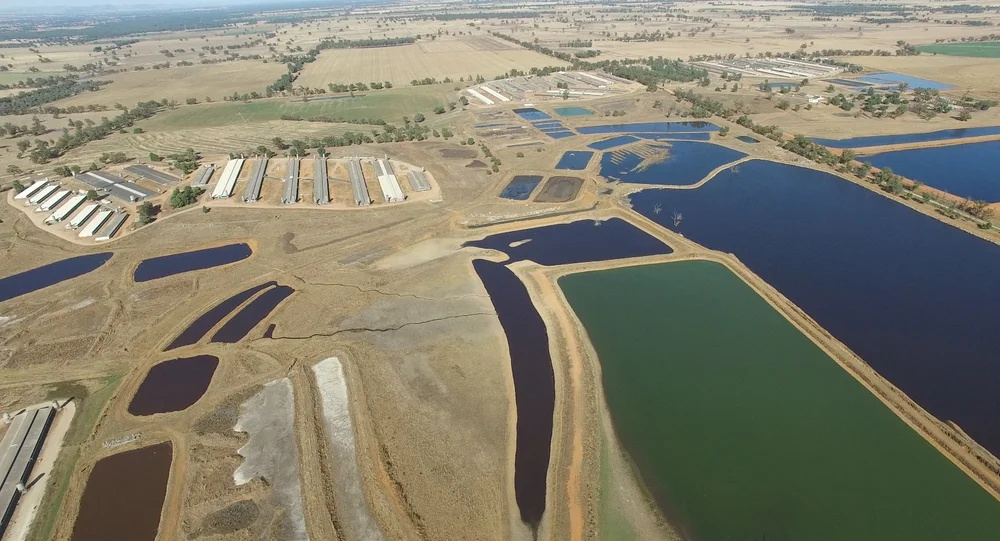
Environmental and planning laws can regulate waste, odour, water, land use and development approvals. Regulation does not mean the impacts disappear—or that communities can easily find the evidence.
Intensive pig farming concentrates urine, faeces, bedding, wash-down water and other waste that must be collected, stored, treated, transported or applied to land.
Whether an environmental licence is required depends on the jurisdiction, facility scale and applicable planning or pollution law. The transparency gap is measured by what monitoring is required, which breaches are published and whether nearby communities can readily access the data.
Odour can arise from pig housing, effluent collection and treatment, solid waste, land application and carcass disposal. Communities may be expected to document repeated impacts while an operator continues under an existing approval.
Development approvals, separation distances, licence conditions and complaint systems can manage odour without eliminating it. The burden can remain on residents to document recurring impacts and seek regulator action.
Poorly managed effluent and waste can affect waterways, groundwater and soil. Heavy rainfall and extreme weather can increase overflow, runoff and system-failure risks.
Environmental laws can impose incident-notification and licence-compliance duties, but public access to monitoring results, breach records and corrective actions varies between jurisdictions and approval systems.
Approval processes frequently assess an individual facility or expansion. This can obscure cumulative effects across feed production, housing, slaughter, transport, waste, water and energy use.
Project assessments usually focus on a defined proposal and specific statutory criteria. Broader cumulative effects can fall between planning, pollution, water, transport and climate systems.
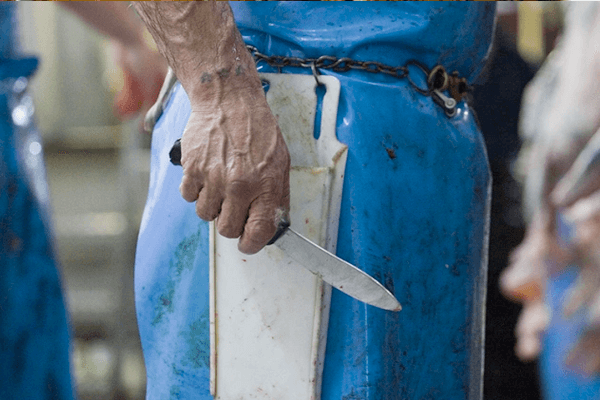 PeopleDivided responsibility
The costs do not stop at the farm gate.
Worker safety, community amenity, environmental health, food safety and public health sit under different systems. Fragmentation can cause every regulator to see only one part of the problem.
Workers may be exposed to stressed animals, repetitive and hazardous manual tasks, machinery, noise, dust, chemicals, bodily fluids and biological hazards.
Work health and safety duties require risks to be managed, but public data specific to pig farming and processing is fragmented across regulators, workers’ compensation systems and broad industry classifications.
Work requiring people to repeatedly confine, injure or kill animals raises serious psychological and psychosocial questions. These impacts must be examined through credible worker testimony, regulator material and peer-reviewed evidence—not assumption or sensationalism.
Psychosocial-hazard duties and general work health and safety obligations may apply, while workers can still face practical barriers to reporting unsafe or cruel conduct. Strong reporting and whistleblower protections are therefore part of the reform need.
Residents may experience odour, noise, traffic, insects, dust and anxiety about pollution or water quality. Planning approval should not be treated as proof that community impacts are insignificant.
Rights to object, appeal, complain and access monitoring data vary by jurisdiction and approval type. The existence of a complaint pathway does not guarantee timely investigation, an effective remedy or public accountability.
Antimicrobial resistance connects animal health, human health, food production and the environment. The appropriate response is evidence-based surveillance, transparent reporting and strong antimicrobial stewardship—not vague or exaggerated claims.
Veterinary-medicine controls, industry stewardship, food surveillance and environmental monitoring are spread across multiple systems. No single framework captures the complete One Health pathway.
Australia needs more than another voluntary industry promise.
No industry should be allowed to write the limits of acceptable suffering for the animals it profits from.
Demand binding protections for pigs
Send a personal email urging decision-makers to replace permitted suffering with enforceable reform.
Take action nowEmail decision-makers Returns to the Action Hub above.Make protection binding and enforceable
- Create binding national standards through an independent and transparent process, with mandatory review dates replacing the outdated 2008 Model Code.
- Remove legal shields and establish independent enforcement, including unannounced inspections and public reporting of deaths, injuries, breaches and outcomes.
End confinement and routine pain
- End legal close confinement, including sow stalls, boar stalls, farrowing crates and renamed or equivalent systems.
- Prohibit routine painful procedures and require effective pain relief during any legislated transition.
Protect pigs, workers and communities
- Guarantee species-appropriate living conditions, including meaningful space, enrichment, nesting material, social contact and movement.
- Protect the environment, workers and communities through accessible data, stronger reporting pathways and safeguards for workers and whistleblowers.
Legal does not mean humane.
Help change the laws, expose the enablers and build sustained pressure for pigs, people and the environment.