Which NSW councils are
poisoning our wildlife?
SGARs are killing owls, possums, quolls, and raptors across NSW. We've audited all 128 councils — find yours and take action.
Find your council, then send the right message.
Search your council to check its SGAR status, evidence and next action — or use the map to explore the statewide picture.
Councils are already switching
These examples show the practical routes councils can take: product substitution, contractor requirements, council motions and formal SGAR-free policy positions. Use them as precedent when asking your own council to act.
Albury City
Completed its transition away from SGARs in December 2024.
Moved facility pest control to a non-anticoagulant product.
The clearest replicable example: councils can change facility products now, without waiting for further national regulation.
Byron Shire
Maintains an SGAR-free approach for community halls.
Uses trapping as its rodent-control method rather than SGAR baits.
Shows SGAR avoidance can become routine facility management, not a one-off exception.
Coffs Harbour
Discontinued contractor use of a brodifacoum SGAR product at holiday parks.
Stopped use of the SGAR product after campaign scrutiny of contractor practices.
Shows councils remain responsible for contractor product choices — and can require safer practice.
Camden & Campbelltown
Council motions prohibit SGAR use on council land.
Used a formal local-government decision to remove SGARs from council land.
Shows elected councillors can create a formal SGAR-free position through local decision-making.
Clarence Valley
Resolved to discontinue SGARs and use lower-risk alternatives where rodenticides are required.
Moved away from SGARs and uses first-generation anticoagulants where rodenticide use remains necessary.
Gives councils a procurement pathway for reducing wildlife risk where rodenticide use continues.
Northern Beaches, Wollondilly, Tweed, Hornsby and other councils have confirmed SGAR-free approaches that residents can point to when asking their own council to change.
Rat poisons designed to never leave the food chain
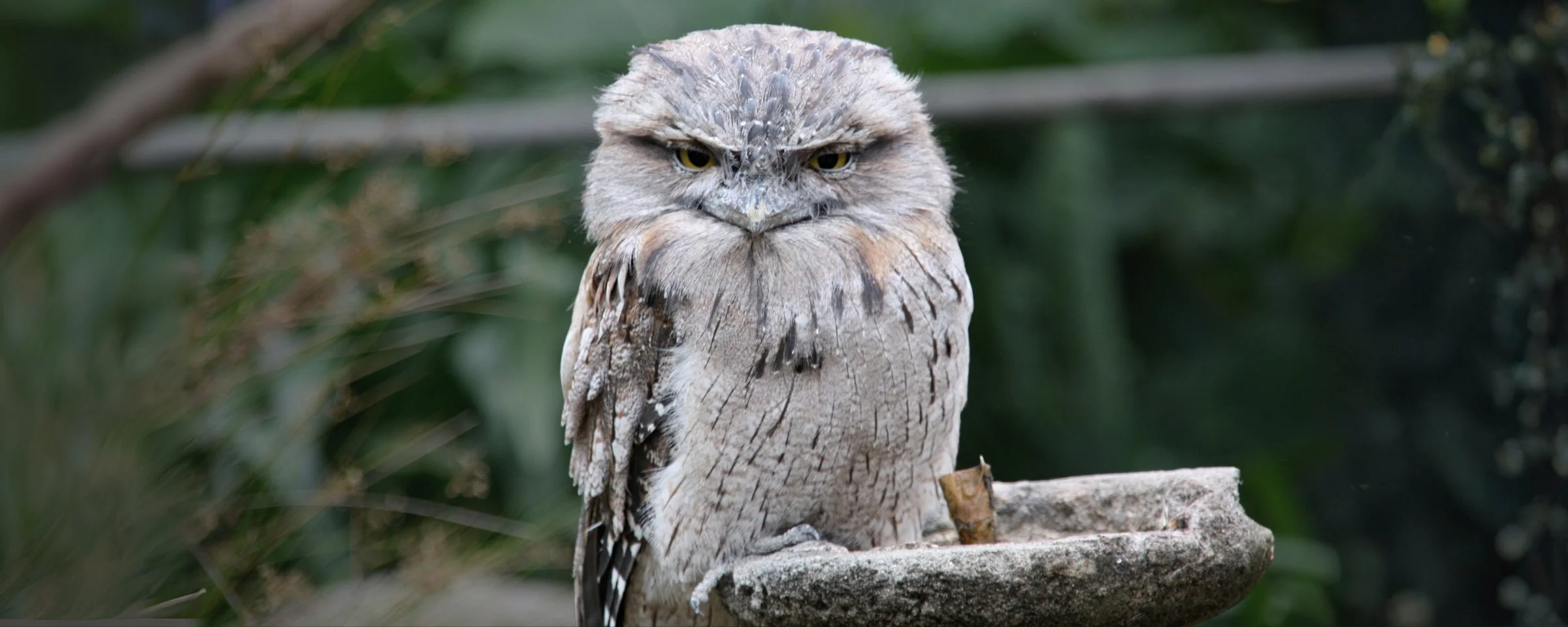
SGARs do not just kill rodents. They persist in poisoned animals and move through the food chain, exposing owls, raptors, quolls and other native predators.
Rats and mice can keep moving before dying, carrying SGAR residues away from the bait source and into parks, drains, buildings and reserves.
APVMA technical material reports SGAR liver half-lives up to 307 days for brodifacoum and 318 days for bromadiolone.
Owls, raptors, quolls and other predators can be exposed simply by eating poisoned prey.
Council bait stations can introduce SGARs into parks, footpaths, reserves and facilities.
The poisoned rodent can keep moving while carrying residues through the local food chain.
The predator receives the residue load when it eats poisoned prey.
RiskTechnical details SGAR compounds found in council products
A silent epidemic in our backyards
SGARs do not just kill rodents. They move through the food chain, persist in predator tissue, and undermine the wildlife that naturally keeps rodent populations in check.
Nocturnal avian predators carried SGAR compounds
A 2023 national study detected SGAR compounds in almost all nocturnal avian predators analysed. Eastern barn owls were among the most severely affected, with potential toxicological or lethal impacts identified in 80% of birds analysed.
Residues do not disappear quickly
SGARs persist in liver tissue, so repeated prey events can build toward toxic or lethal concentrations long after a bait station has been serviced.
Poison removes natural rodent control
When SGARs kill owls and raptors, councils lose the predators that naturally suppress rodents — creating pressure for more poison use.
The regulator has acted. Councils must catch up.
On 10 March 2026, the Australian Pesticides and Veterinary Medicines Authority (APVMA) announced that registrations for all products containing second-generation anticoagulant rodenticides would be suspended for one year from 24 March 2026.
The APVMA determined that current SGAR use presents unacceptable risks to non-target animals, including native wildlife. During the suspension period, SGAR products may only be supplied or used according to nationally enforceable instructions published by the APVMA.
The broader anticoagulant rodenticide reconsideration is still being finalised, but councils do not need to wait. Our tracker documents which NSW councils are still confirmed as using or approving SGAR-containing products — and gives residents a direct pathway to demand a safer policy now.
What councils should do now
- Review pest-control contracts and product lists.
- Remove SGAR products from council-managed facilities.
- Require contractors to use safer, lower-risk alternatives.
- Publish a clear SGAR-free policy position.
Frequently asked questions
Everything you need to know about the SGAR Council Tracker, the data behind it, and how to take action.
Why does it matter which rat poison my council uses?
Not all rodenticides are equally harmful. First-generation anticoagulants (FGARs) like coumatetralyl and warfarin break down quickly and accumulate poorly in predator tissue. Second-generation anticoagulants (SGARs) are far more persistent, accumulating in liver tissue and killing wildlife up the food chain — owls, eagles, quolls, even cats and dogs — that eat poisoned rodents.
Many councils use SGARs by default because their pest control contractors supply them, without realising safer alternatives exist and are just as effective in urban settings.
Can councils actually switch? Are alternatives effective?
Yes — and many already have. Northern Beaches, Port Macquarie-Hastings, Wollondilly, and Tweed are among the councils that have committed to SGAR-free operations, often by updating their contractor procurement requirements. None have reported increases in rodent complaints.
Effective alternatives include first-generation anticoagulants in enclosed bait stations, colecalciferol (vitamin D3 rodenticides), electronic traps, and integrated pest management approaches. The transition is administratively simple — it just requires political will.
How does Animal Liberation collect council data?
We submit formal information requests (Government Information Public Access requests in NSW), direct council correspondence, and follow-up requests seeking product names, active ingredients, contractor details, and whether councils operate wildlife or vertebrate pest management programs.
Councils marked "Under Investigation" have either not provided a complete response, have not confirmed product-level rodenticide details, or require further departmental/contractor follow-up. Tracker statuses reflect the written evidence available at the last data update: February 2026.
What does "SGAR-Free" actually mean on the tracker?
"SGAR-Free" means the council has confirmed in writing that it does not use second-generation anticoagulant rodenticides in council-managed facilities or operations. This includes contractor operations undertaken on council's behalf.
Some SGAR-Free councils still use other rodenticides or conduct wildlife control programs (such as rabbit or fox management). We note the full details in each council's profile. Clicking a council card shows the complete response we received.
What happens when I email my council through the tracker?
The tracker generates a pre-written email addressed directly to your council's General Manager or public correspondence address. The email is drafted as a constituent request, asking the council to review its rodenticide policy and commit to a SGAR-free position.
Councils are required to respond to constituent correspondence. Volume matters — each email that arrives signals that residents are watching. We encourage you to send the email, then follow up at a council meeting if you don't receive a substantive response.
Outside NSW?
You can still act.
The NSW tracker is phase one, but the APVMA’s March 2026 SGAR suspension gives supporters in every state and territory a clear reason to ask their own council to stop using SGARs now.
Can't find your council? Try a shorter search (e.g. "Geelong" not "Greater Geelong City Council"). If no email is on file, the button will link directly to your council's contact page instead.
Ask your council to remove SGARs
from its contracts
Every council that goes SGAR-free protects owls, raptors, reptiles and other wildlife from slow, preventable poisoning.