The Camel Milk Co Australia
The Industrialization of a Sensitive Species.
As one of the larger players in the Australian market, this facility represents the aggressive shift from "niche" farming to intensive industrial production.
Kyabram, Victoria
PART OF THE DECEPTIVE DAIRY INVESTIGATION
The Story Sold to the Public
This facility tells a story of innovation and professional excellence.
They position themselves as the "gold standard" of Australian camel dairy, focusing on high-tech processing and the rapid expansion of camel milk into the mainstream market.
What We Documented
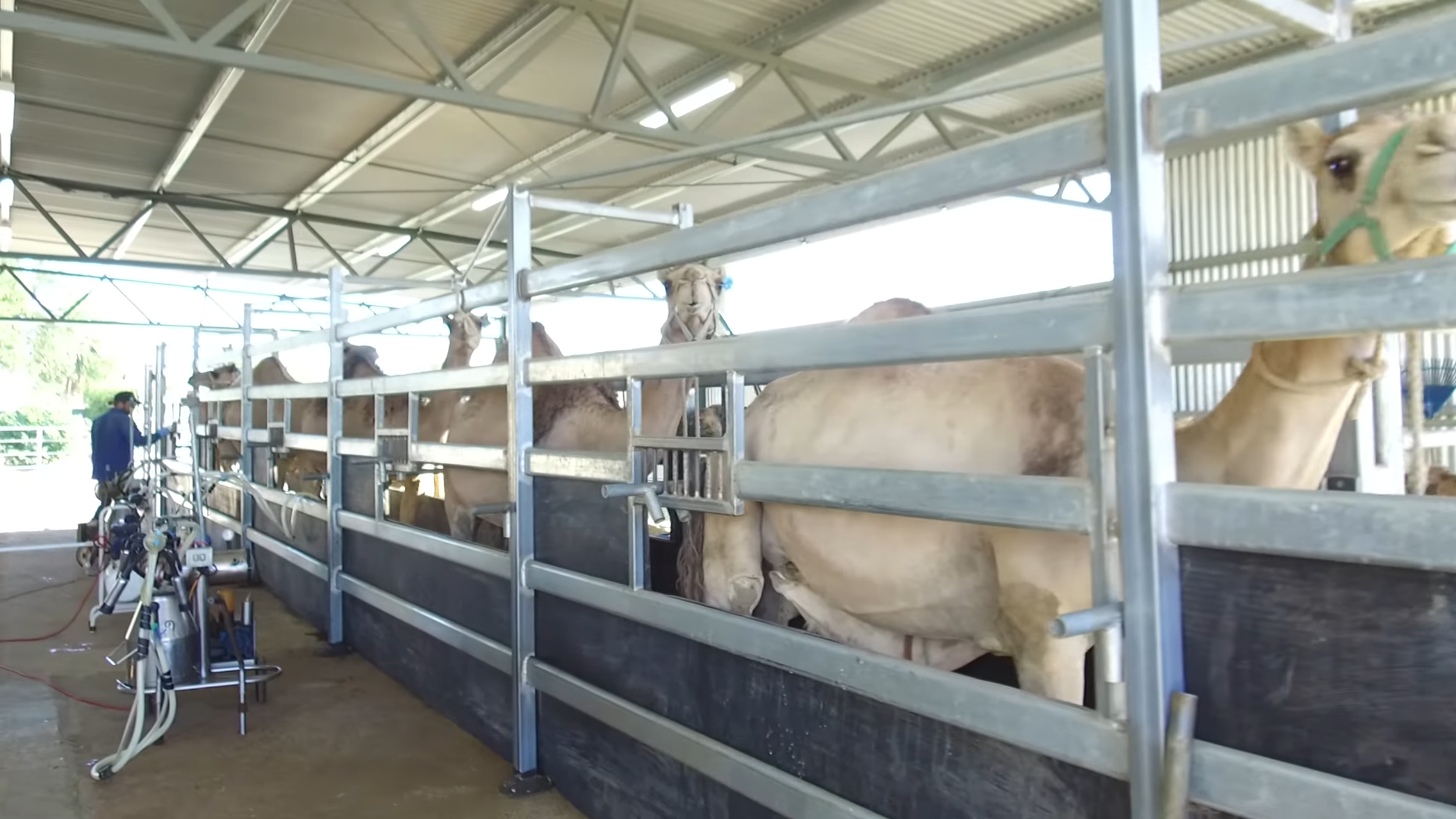
Mass Production Realities: We documented high-density yards where camels are treated as cogs in a machine to meet the rising demand that saw production hit 180,000 litres annually.
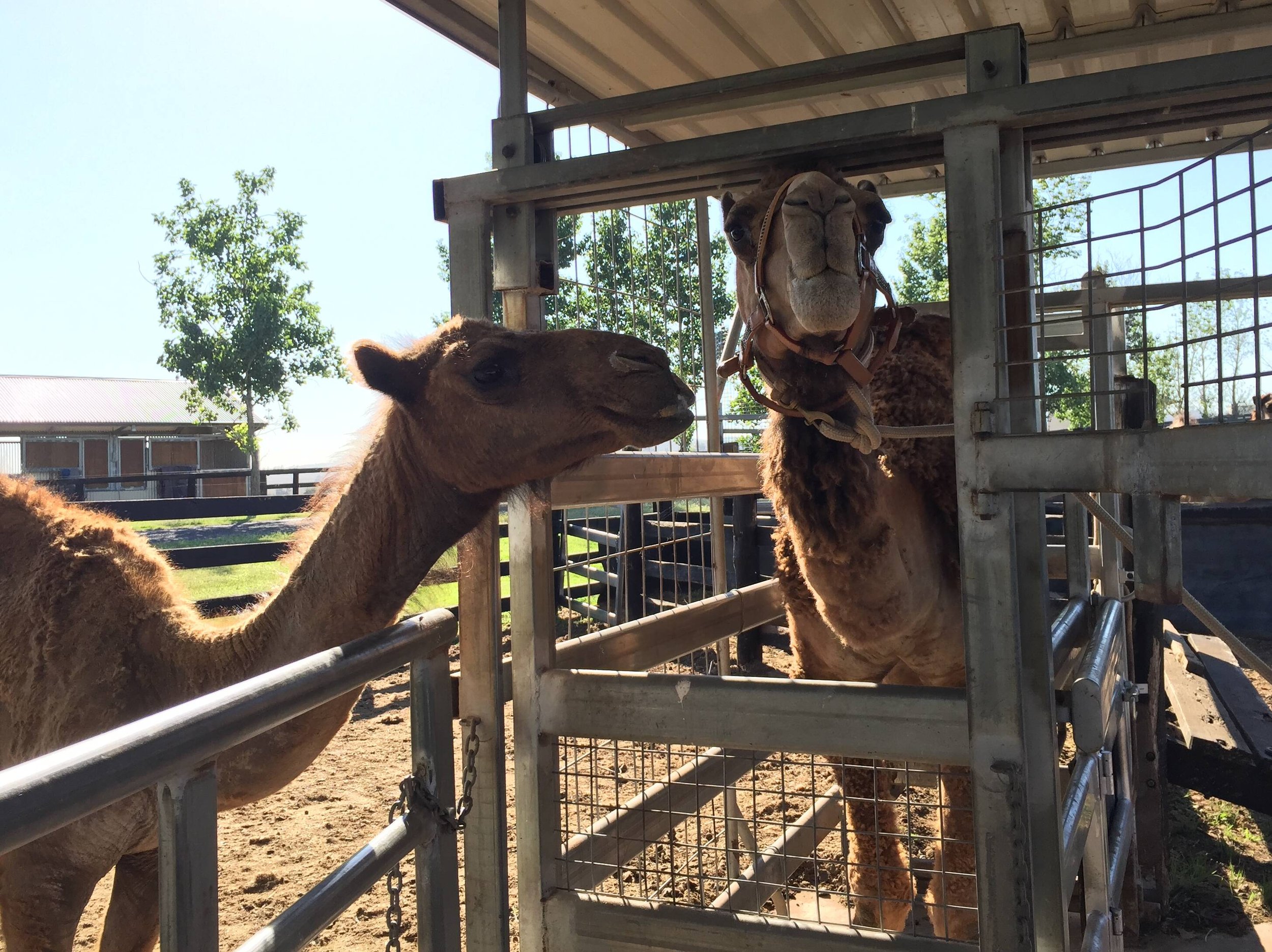
Restricted Movement: Documentation of camels in restrictive "sternal recumbency" (tied down) for handling, a practice permitted by the industry's own code.
Separation Trauma: Evidence of the distress caused to both mother and calf during the mandatory separation required for large-scale milking operations.
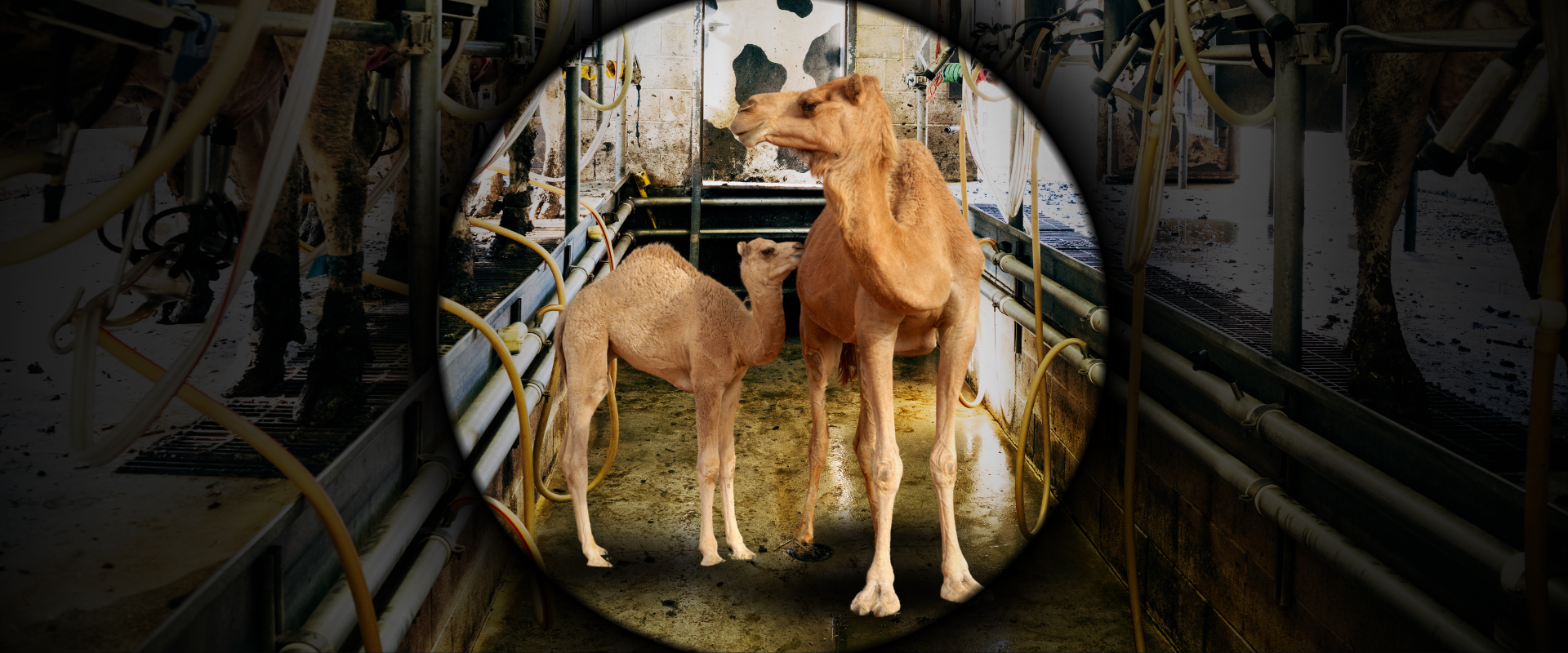
THE REALITY OF DAIRY
Milk does not exist without reproduction.
Every bottle on a shelf represents:
A pregnancy
A birth
A calf
A lactation cycle
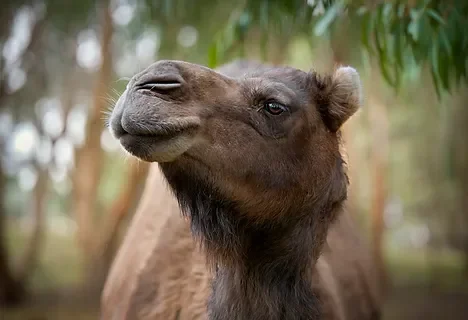
Camels are intelligent, social, highly sentient animals. They recognise one another. They form bonds. They grieve separation.
In this system, they are confined, managed and milked.
Calves are born into production.
Individuals become inventory.
Behind the
“Small Farm” Image
Camel Milk Dairy supplies retailers in metropolitan Sydney.
This is not a hobby farm.
It is a commercial enterprise embedded in an urban supply chain.
As demand grows, so does pressure for output.
And as production intensifies, welfare becomes secondary to profitability.
What Consumers Aren’t Told
Camel milk is frequently marketed as natural, healing, and nutrient-dense.
But broader industry research shows:
There are no antibiotics registered specifically for camelids in Australia
Health issues such as mastitis, intestinal worms and skin conditions have been reported within Australian camel dairies
Consumers are rarely informed:
What treatments are used
What oversight exists
What welfare standards apply
What transparency is required
They are sold an image.
Not the system.
This Is Exploitation
Camel Milk Dairy is part of a growing industry that captures, confines and commodifies Australia’s dromedary camels.
Animals once roaming vast landscapes are reduced to production units in holding yards.
Their bodies are managed for output.
Their calves are born into the cycle.
Their identities replaced by plastic tags.
This is exploitation — dressed up as niche agriculture.
This facility reflects a broader pattern of camel commodification.
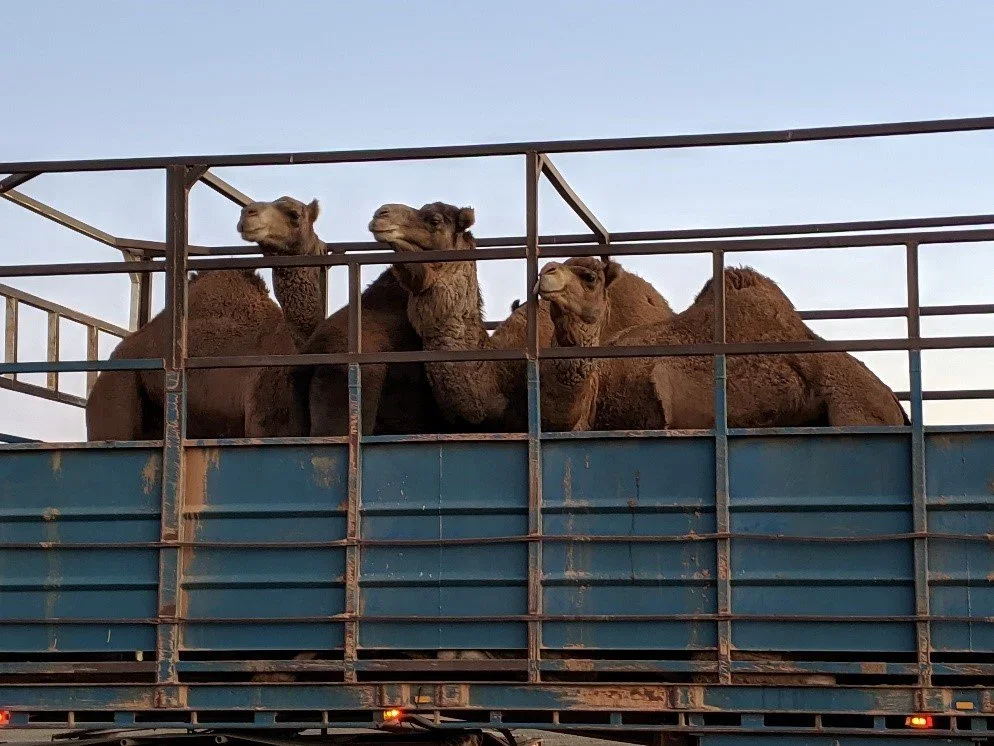
Don’t Let This Continue.
Animal Liberation is calling for:
• Stronger, enforceable welfare protections for camels
• Mandatory transparency in camel dairy operations
• Independent welfare auditing
• Legislative reform recognising camels as sentient animals — not “resources”
Australian camels deserve protection — not production.
This Doesn’t End Here
Camel Milk Dairy operates because there is demand.
Demand exists because consumers are not shown the full truth.
You can help change that.
Australian camels deserve protection — not production.
Refuse to Fund Exploitation
Choose not to purchase camel milk or camel dairy products.
Expose the Reality
Share this investigation with your community and challenge deceptive marketing.
Strengthen Legal Protections
Support Animal Liberation’s push for enforceable welfare protections and transparent oversight for camel dairies across Australia.